THE SIGNAL
Width, not voltage
The control signal repeats every 20 ms (50 Hz). The length of each pulse, nominally 1 to 2 ms, sets the position.
Send a pulse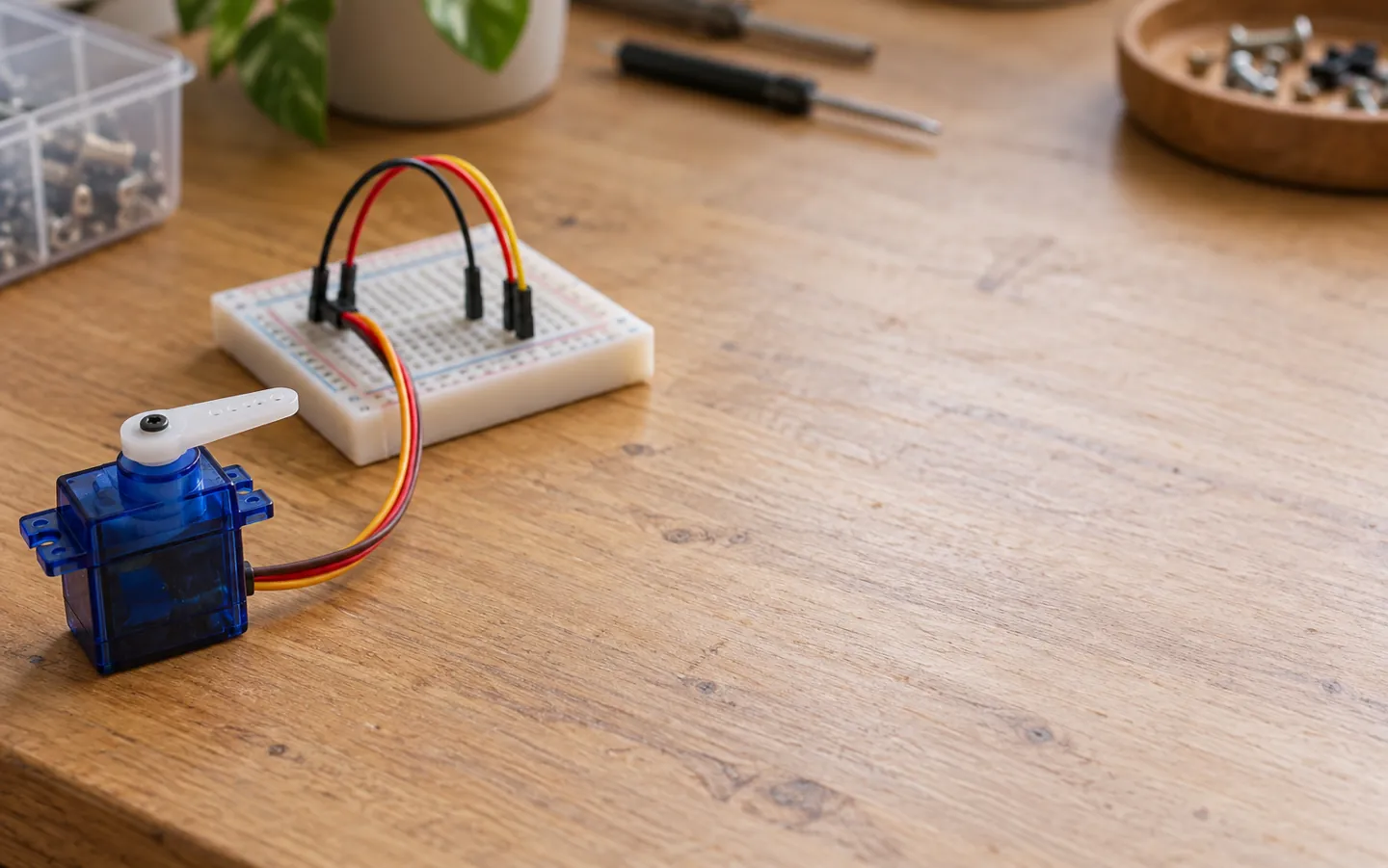
 doodleservo
HOW IT WORKS
1.5 MS is the centre
A servo turns to the angle you ask for, and stays there.
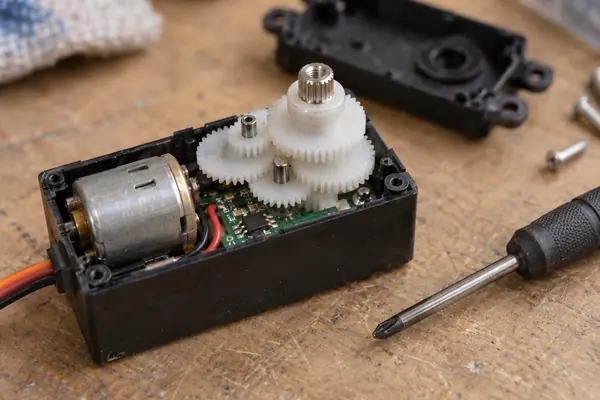
Inside the little box is a motor, a gear train and a potentiometer that measures where the output shaft is. A control circuit compares that with the pulse it receives and keeps correcting until the two match.
Updated
Send a pulseTHE SHORT ANSWER
The pulse says where to go.
The potentiometer says where it is.
THE SIGNAL
The control signal repeats every 20 ms (50 Hz). The length of each pulse, nominally 1 to 2 ms, sets the position.
Send a pulseTHE INSIDES
A small DC motor drives a train of reduction gears. A potentiometer on the output shaft reports the shaft's position back to the circuit.
The feedback loopTHE USES
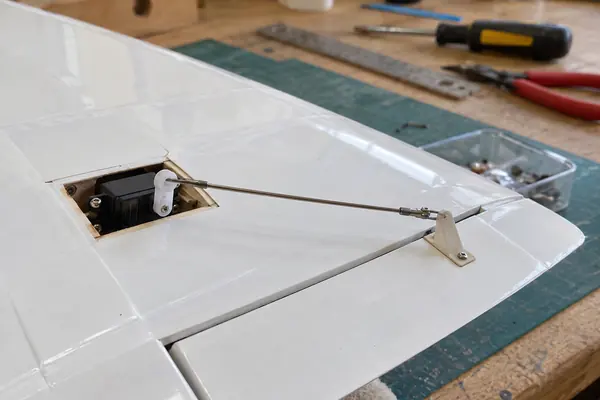
Servos move control surfaces and linkages in radio-controlled models, and their low cost made them popular in small robots.
See the numbersA QUICK PULSE CHECK
Pick a pulse width to see what a typical hobby servo does with it. The bar shows how far along its travel, or how fast, it goes.
The 1 to 2 ms range is a convention rather than a strict standard. How many degrees it covers varies between servos.
TWO NUMBERS WORTH KNOWING
One figure on how often the servo is told where to go,
one on how much the pulse changes.
50 Hz
Control pulses per second
The control signal is a pulse repeated every 20 ms, a 50 Hz frame rate. Adafruit says the servo expects a pulse roughly every 20 milliseconds.
FRAME RATE · RC SERVO CONVENTION
1–2 ms
Range of pulse widths
Pulse width ranges from 1 ms to 2 ms, with 1.5 ms as neutral. Some servos respond to wider pulses for extra travel, but some are mechanically limited to 90° and can strip their gears if driven past it.
PULSE WIDTH · SPARKFUN
Power matters too. SparkFun says a small unloaded servo may draw about 10 mA but a large one under heavy load 1 A or more, and suggests a 5 V supply, with 5.5 V as an absolute maximum when used with a microcontroller board.
THREE THINGS TO GET RIGHT
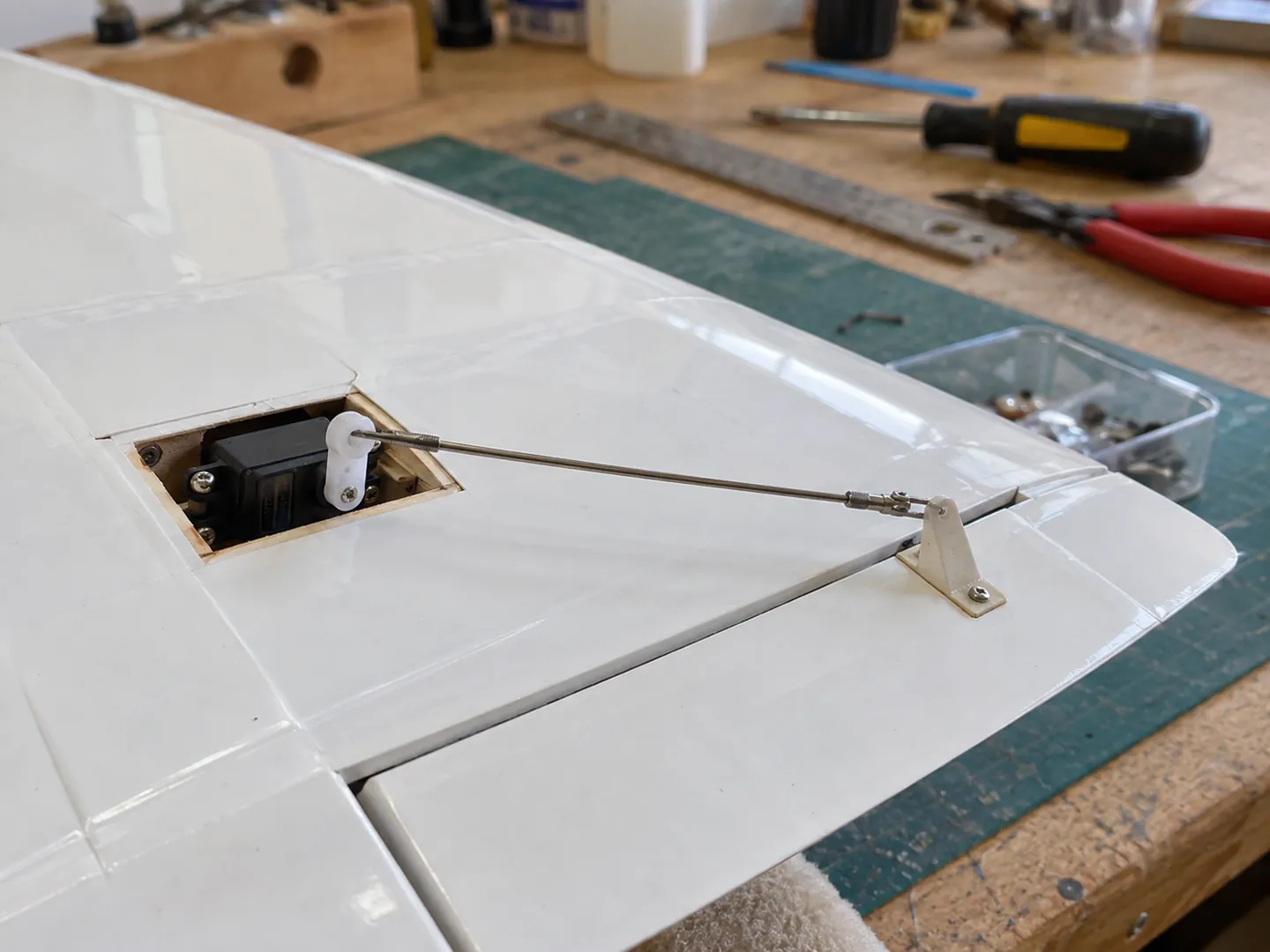
Hobby servos are forgiving, but these points from SparkFun's tutorial save stripped gears and mystery resets.
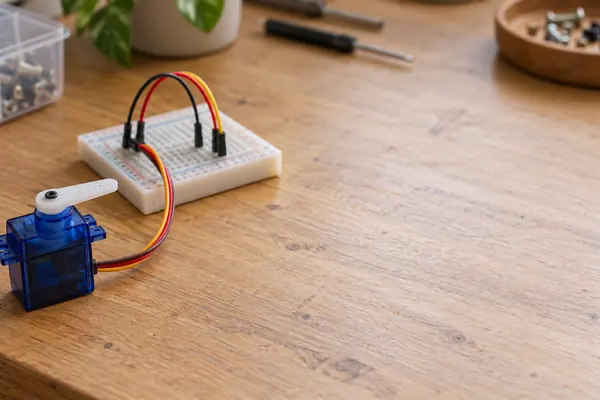
Three wires: ground, power and signal. Colours vary by maker, so check the documentation before connecting.
Allow at least 1 A per servo. A 100 mA USB port only suits the smallest servos.
If your servo is limited to 90°, do not drive it past its range. Choose a servo specified for 180° if you need more travel.
THE FEEDBACK LOOP
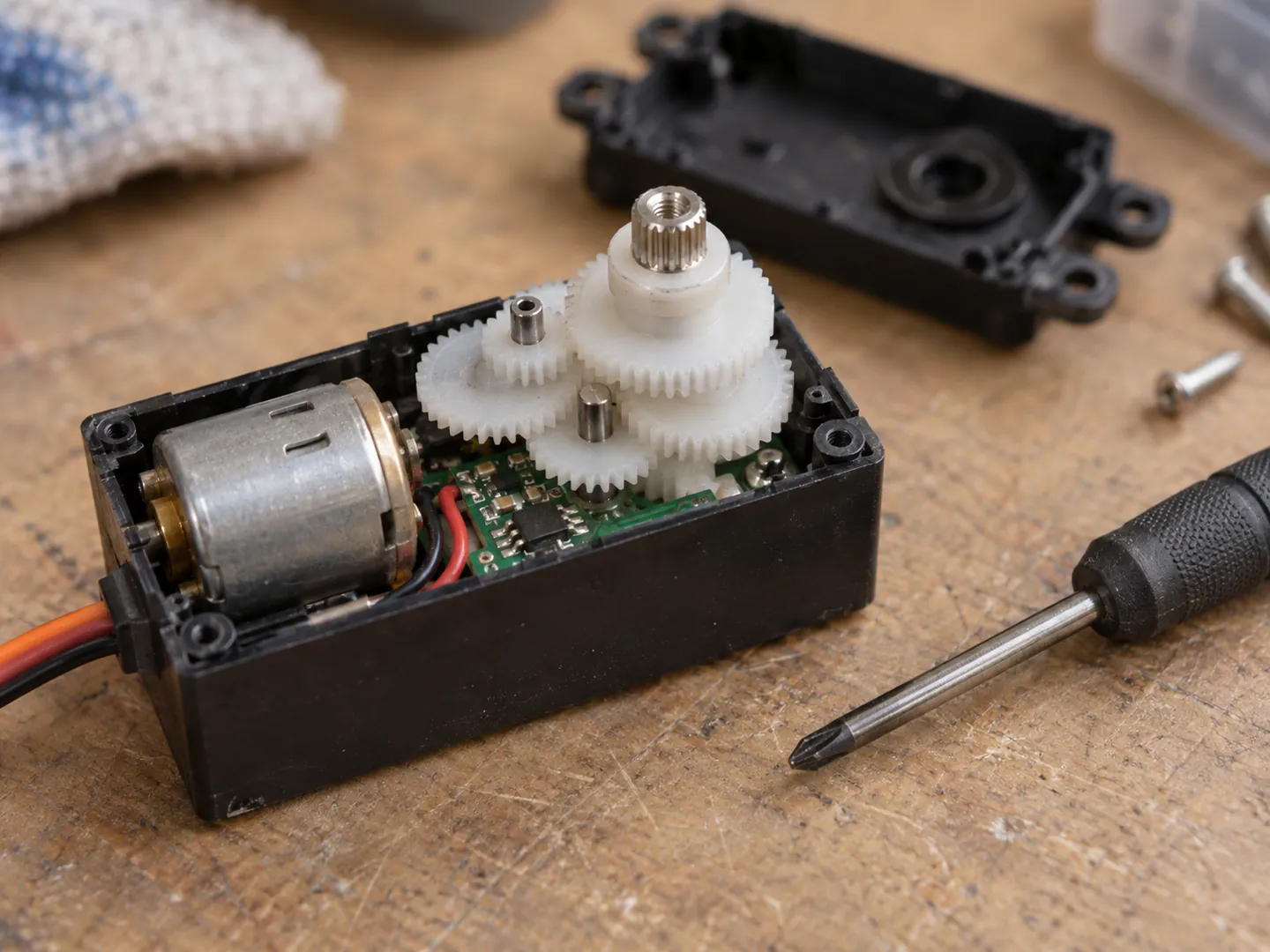
The circuit continuously compares the potentiometer reading with the commanded position. Any mismatch becomes an error signal that drives the motor until the error reaches zero. If you push the arm off position, the error reappears and the motor corrects it.
This error-sensing negative feedback is what makes it a servomechanism. Feedback position control goes back to steam-powered ship steering engines in the 1860s; the French word servomoteur was used in 1868 for engines that steered ships.
Questions
A small DC motor, a gear train, a potentiometer on the output shaft to sense position, and a small circuit board that drives the motor in either direction.
The control signal is a 50 Hz stream of pulses. Each pulse's width tells the servo where to be, and the steady repetition keeps telling it.
It depends on the servo. Adafruit describes 2 ms as 180°, while SparkFun says common servos cover about 90° from 1 to 2 ms. Many servos only turn through about 170°.
A servo whose shaft turns continuously. The pulse sets speed and direction rather than position, with 1.5 ms set to stop it.
Speed is usually the time to turn 60°. Torque is the weight it can lift on a pulley of a given radius, so a 0.2 s / 2 kg servo turns 60° in 0.2 s and lifts 2 kg at 1 cm.
Sources
ABOUT THIS NAME
doodleservo.com is part of the DoodleSale portfolio. It isn't in an auction right now, but you can ask about leasing it.